
Animal Insurance
Animal Insurance
Protecting India's Growth Engine
The fact that 70% of the population in India lives in rural areas and contribute to the development of the country in a big way makes it important for them to avail schemes meant for their welfare. It wouldn’t be wrong to say that farmers and their agriculture business play an important part in the growth of our country. Thus, it makes sense for this section to get coverage as per their needs in the form of rural insurance plans. Rural insurance is basically insurance that has been created for the rural public to insure their businesses such as poultry, cattle, farming, etc. Individuals can claim benefits in case of death of animals or loss of crop.
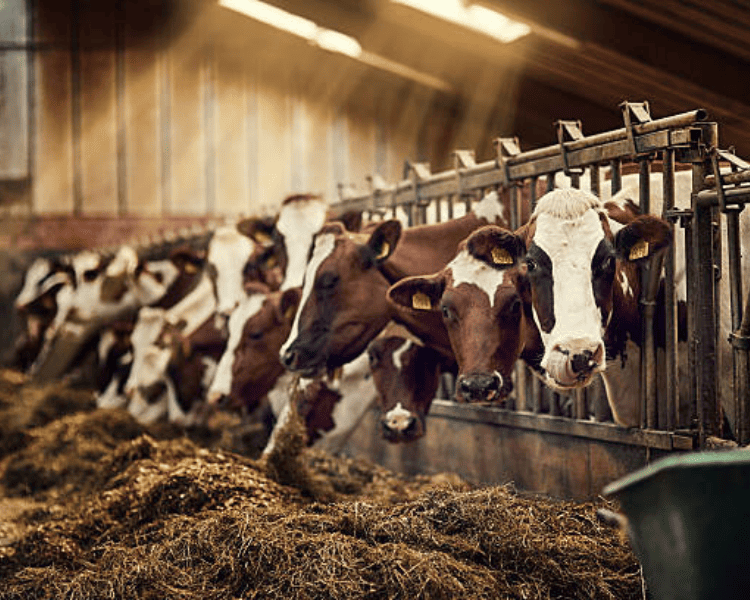
Livestock (Cattle) Insurance
We Provide Comprehensive Insurance Cover For Cattle Against Death Due To
- Diseases and Accidents
- Natural Calamities
- Riots, Malicious Damage, Terrorism
- Permanent Loss Of Milk Yielding Capacity Due To Disease
Process of Insurance
Following are the documents which should be submitted to get the claim amount:
- Proposal form.
- Medical certificate from veterinary doctor.
- Identification tag of the insured cattle.
- Minimum 2 photographs of the insured animal
- Receipt of premium payment
- Issuance of Insurance Policy
Claim Process
Some of the documents required to be submitted to the insurance company for making claims are:
- Duly filled in claim form
- Photocopy of insurance policy
- FIR report in case of accidents/ vandalism
- Post Mortem certificate (in case of death of the insured)
- Evidence of SC certificate
- Ear tags (in case of cattle insurance)
- Pass book /cancelled cheque of the bank account where the claim amount has to be paid
Government Sponsored Livestock (Cattle) Insurance
Process
An animal will be insured for its current market price. The market price of the animal to be insured
will
be assessed jointly by the beneficiary and the insurance company preferably in the presence of the
Veterinary officer. The minimum value of animal should be assessed by taking Rs.3000 per liter per day
yield of milk or as per the price prevailing in the local market (declared by Government) for cow and
Rs.4000 per liter per day yield of milk or as prevailing in the local market (declared by Government)
for
buffalo. The market price of pack animals (Horses, Donkey, Mules, Camels, Ponies and Cattle/Buff. Male)
and Other livestock (Goat, Sheep, Pigs, Rabbit, Yak and Mithun) are to be assessed by negotiation
jointly by owner of animal and by insurance company in the presence of veterinarians Doctor.
The animal insured will have to be properly and uniquely identified at the time of insurance claim. The
ear tagging should, therefore, be full proof as far as possible. The traditional method of ear tagging
or the recent technology of fixing microchips could be used at the time of taking the policy. While
processing an insurance proposal, one photograph of the animal with the Owner and one photograph of the
animal clearly with the EAR TAG visible shall be taken at the time of processing the insurance
documentation. In case of sale of the animal or otherwise transfer of animal from one owner to other,
before expiry of the Insurance Policy, the authority of beneficiary for the remaining period of policy
will have to be transferred to the new owner.
Only four documents would be required by insurance companies for settling the claims viz. intimation
with the Insurance Company, Insurance Policy paper, Claim Form and Postmortem Report.
About the scheme
The Livestock Insurance Scheme, a centrally sponsored scheme was implemented on a pilot basis during
2005-06 and 2006-07 of the 10th Five Year Plan and 2007-08 of the 11th Five Year Plan in 100 selected
districts. The scheme was later implemented on a regular basis from 2008-09 in 100 newly selected
districts of the country.The scheme was later subsumed as a component titled Risk Management and
Insurance under the sub-mission on livestock development of National Livestock Mission.
The component aims at management of risk and uncertainties by providing protection mechanism to the
farmers against any eventual loss of their animals due to death and to demonstrate the benefit of the
insurance of livestock to the people.
Coverage
The scheme is implemented in all the districts of the Country from 21.05.2014.
Animals covered
The indigenous / crossbred milch animals, pack animals (Horses, Donkey, Mules, Camels, Ponies and Cattle/Buffalo Male) , and Other Livestock (Goat, Sheep, Pigs, Rabbit, Yak and Mithun etc.) are covered under the purview of this component. Central assistance units ( one cattle unit is equal to 1 animals) Benefit of subsidy is to be restricted to 5 cattle units ( one cattle unit is equal to 1 animals) per beneficiary per household for all animals except sheep, goat, pig and rabbit. In case of sheep, goat, pig and rabbit the benefit of subsidy is to be restricted based on "Cattle Unit" and one cattle unit is equal to 10 animals i.e a total of 50 animals. If a beneficiary has less than 5 animals / 1 Cattle Unit, s/he can also avail the benefit of subsidy.
Central assistance
Benefit of subsidy is to be restricted to 5 cattle units (one cattle unit is equal to 1 animals) per beneficiary per household for all animals except sheep, goat, pig and rabbit. In case of sheep, goat, pig and rabbit the benefit of subsidy is to be restricted based on "Cattle Unit" and one cattle unit is equal to 10 animals i.e a total of 50 animals. If a beneficiary has less than 5 animals / 1 Cattle Unit, s/he can also avail the benefit of subsidy.
Private Dairy Livestock (Cattle) Insurance
We Cover
All indigenous/cross
breed/exotic animals in the prescribed age groups duly fixing the value and
certifying the health of the proposed animal by a qualified Veterinary Doctor.
Who can be insured ?
Animal owners
/ private dairies / cooperative dairies / NDDB owned dairies.
Insured against What Risks ?
Death
due to accidents including fire lightning flood and cyclone or disease contracted or occurred
during the currency of the policy period. Permanent Total Disability due to total incapacity to conceive
or yield milk by paying extra premium.